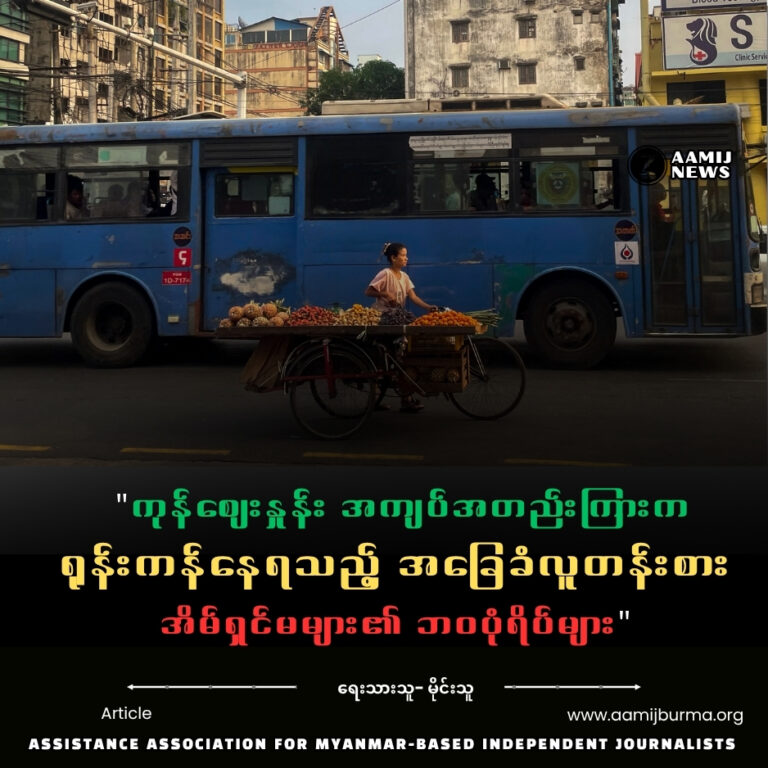
Yangon’s YBS buses are an essential part of daily life for millions of people across the city. For many residents, they are the primary and most affordable means of transportation.
But for women, YBS buses are increasingly becoming places of fear rather than convenience.
Since the 2021 military coup, the weakening of law enforcement and public security has contributed to a rise in sexual harassment cases on public transportation. More alarmingly, recent investigations suggest that these incidents are no longer isolated acts committed by individual sexual predators. Instead, they are increasingly linked to organized cybercrime networks exploiting women’s dignity for profit.
Sexual Harassment in Crowded Public Buses
A recent incident on YBS Route 71 highlighted the dangers women continue to face during their daily commute.
According to a woman who experienced the incident, she was feeling unwell and resting with her eyes closed while seated on the bus. During that time, a man wearing a face mask and carrying a backpack slowly moved closer to her.
The man intentionally used his backpack and shirt to conceal his actions from nearby passengers. Hidden behind the cover, he had exposed his genitals and deliberately attempted to make physical contact with the woman.
For many women, such situations can be terrifying and often leave victims too shocked or frightened to react. But this victim responded differently.
She immediately stood up and shouted at the perpetrator in front of the passengers, publicly confronting him for his actions.
“Have you no shame? How can you behave like this in broad daylight?” she shouted loudly in front of the passengers.
The perpetrator initially tried to deny his actions, saying, “What did I even do?” However, the woman’s firm reaction forced him to flee the bus in embarrassment before it reached Lan Thit bus stop.
“I’m not one of those women who will stay silent out of fear when people like you do this,” she said.
Her response became a powerful reminder that women should not remain silent in the face of sexual harassment.
More Than Individual Misconduct
At first glance, such incidents may appear to be the actions of individual offenders. However, investigations reveal a far more disturbing reality.
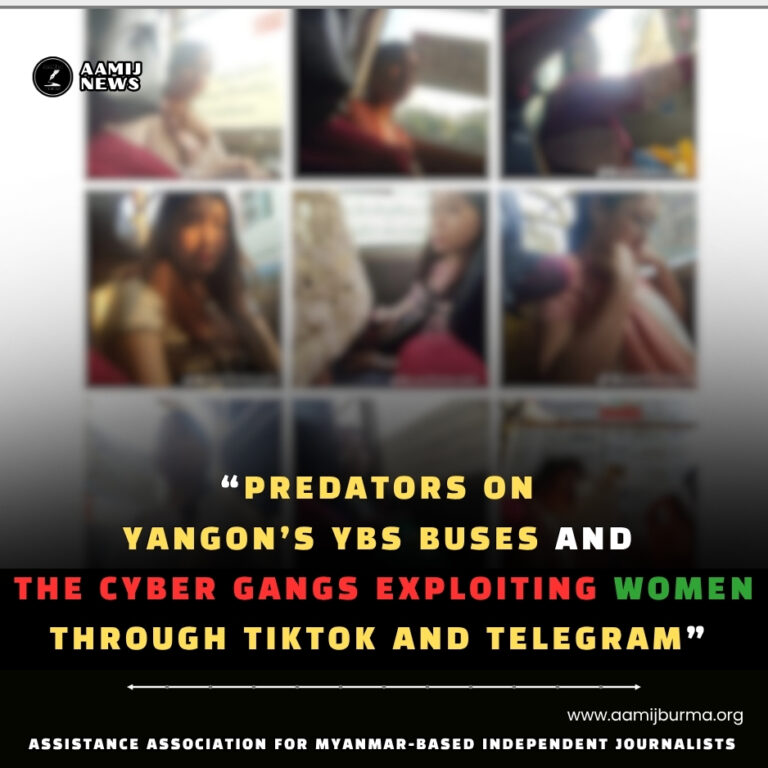
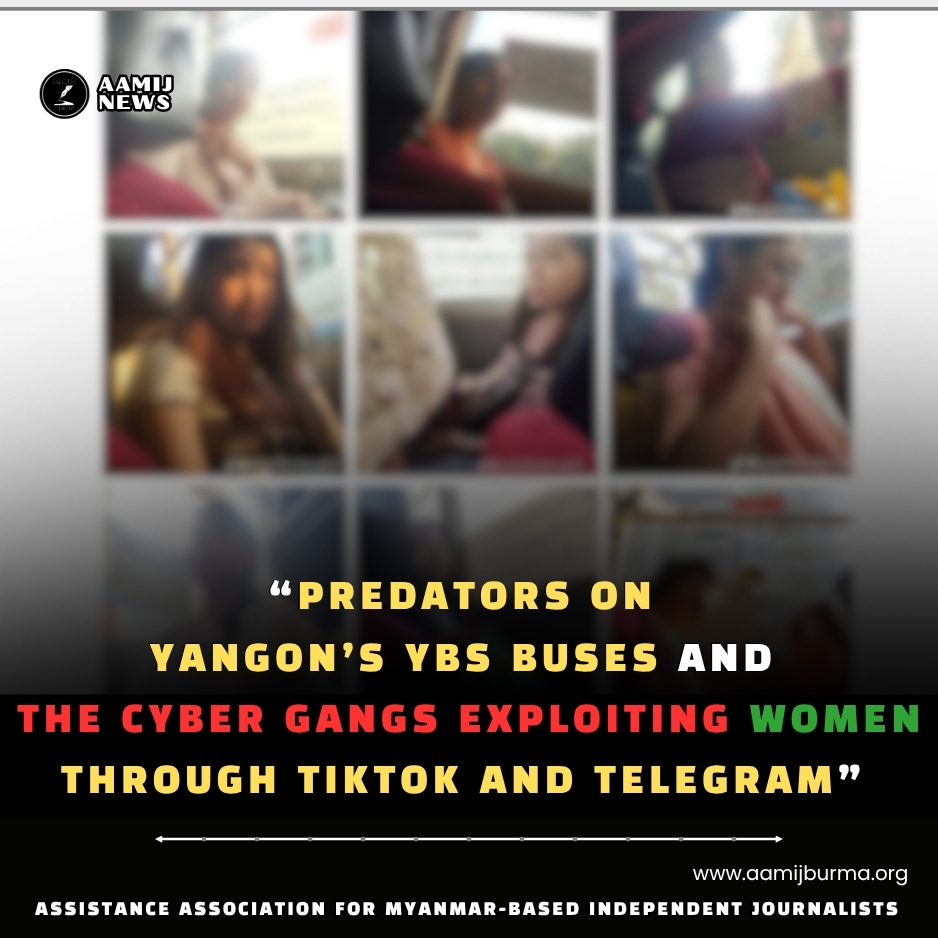
Organized cybercrime groups are reportedly targeting women on YBS buses by intentionally carrying out sexual harassment while secretly recording victims’ reactions and facial expressions using mobile phones.
Short clips are later uploaded to TikTok to attract viewers and direct traffic toward Telegram channels. There, users are invited to pay for access to so-called “VIP groups” where explicit and exploitative videos are distributed.
Selling Women’s Dignity for Profit
Entry fees for these Telegram VIP groups reportedly cost around 10,000 kyats. Payments are systematically collected through widely used mobile payment platforms such as KPay and WavePay.
Some of the videos reportedly include extremely degrading acts committed against unsuspecting women without their knowledge or consent.
These acts go beyond harassment. They represent serious violations of personal dignity, bodily autonomy, and privacy, while potentially constituting criminal offenses under both cybercrime and sexual violence frameworks.
Even more disturbing is the fact that victims’ faces are often left fully visible in the videos, publicly exposing and humiliating them. Meanwhile, perpetrators conceal their own identities behind masks and anonymity.
An Urgent Warning for Women’s Safety
This issue is no longer simply about harassment on public transportation.
It reflects the emergence of organized digital exploitation networks using women’s bodies and humiliation as a source of profit through social media and encrypted platforms.
Women commuting on YBS buses are advised to remain alert, especially when individuals attempt to stand unusually close while using bags, clothing, or other objects to conceal suspicious behavior. Victims are encouraged to speak out, seek help, and alert nearby passengers rather than staying silent out of fear.
At the same time, YBS authorities should strengthen security measures, including the installation and monitoring of CCTV systems on buses. Financial service providers such as KPay and WavePay should also investigate and block financial transactions connected to exploitative criminal activities.
The exploitation of women’s safety and dignity for financial gain is a serious social threat that requires urgent public awareness, accountability, and collective action to stop.